
7 Costly Mistakes Jaipur Homeowners Make When Buying Kitchen Appliances
Building a new home or renovating an existing kitchen is an exciting milestone. Whether you are moving into a sprawling new apartment corridor along Ajmer Road, a premium high-rise in Jagatpura, or updating an ancestral family bungalow in Vaishali Nagar, the kitchen demands a massive chunk of your design budget. However, it is also the place where homeowners make the most expensive mistakes, particularly when selecting their core appliances.
Too often, the appliance selection process is treated as an afterthought. After spending months debating between Italian marble and quartz countertops, or picking out the perfect acrylic or laminate shutters, families frequently rush into an electronics store or scroll through online e-commerce platforms during a holiday sale to purchase their hobs, chimneys, and dishwashers in a hurry.
The result? Appliances that don’t fit the modular cabinet cut-outs, chimneys that choke under the weight of everyday Indian spice tempering, and dishwashers that fail prematurely due to regional water hardness. This guide highlights the seven most common and costly mistakes Jaipur homeowners make when setting up their kitchens, and how to approach your layout like a seasoned professional.
Why Most People Regret Their Kitchen Appliance Purchases Later
The root cause of appliance buyer’s remorse is a fundamental lack of forward planning. A premium kitchen setup cannot be constructed by simply placing standalone pieces into empty spaces. Modern modular spaces are highly integrated systems where the woodwork, electrical layout, plumbing lines, and appliance footprints must align perfectly down to the millimeter.
When you buy an appliance simply because it has a flashing digital discount badge online or a sweet cashback offer at a generic retail market, you are forcing your interior designer or carpenter to modify their carpentry around a static piece of metal. This lack of strategic coordination frequently results in awkward cosmetic gaps, poorly routed exhaust ducting pipes, and exposed electrical wiring that ruins the minimalist aesthetic of a modern home.
Mistake 1: Choosing Price Over Long-Term Performance
It is easy to fall into the trap of cheap multi-brand appliance bundles. Many generic electronic stores package a hob, a chimney, and a microwave together at an incredibly low upfront price. However, in the appliance industry, an exceptionally low price tag is almost always tied to sub-standard manufacturing materials.
Cheap hobs often use thin, non-toughened glass panels that can shatter under the weight of a heavy brass pressure cooker or continuous high-temperature cooking. Budget chimneys rely on lightweight plastic blowers instead of balanced metallic impellers, meaning they lose their air suction capacity within a single year of handling unrefined mustard oils and heavy spice blends. When a budget unit breaks down, the cost of specialized technician call-outs, recurring spare part replacements, and eventual early retirement of the appliance quickly exceeds the initial cost of investing in a premium, heavily tested brand.
Mistake 2: Ignoring Kitchen Layout & Space Planning
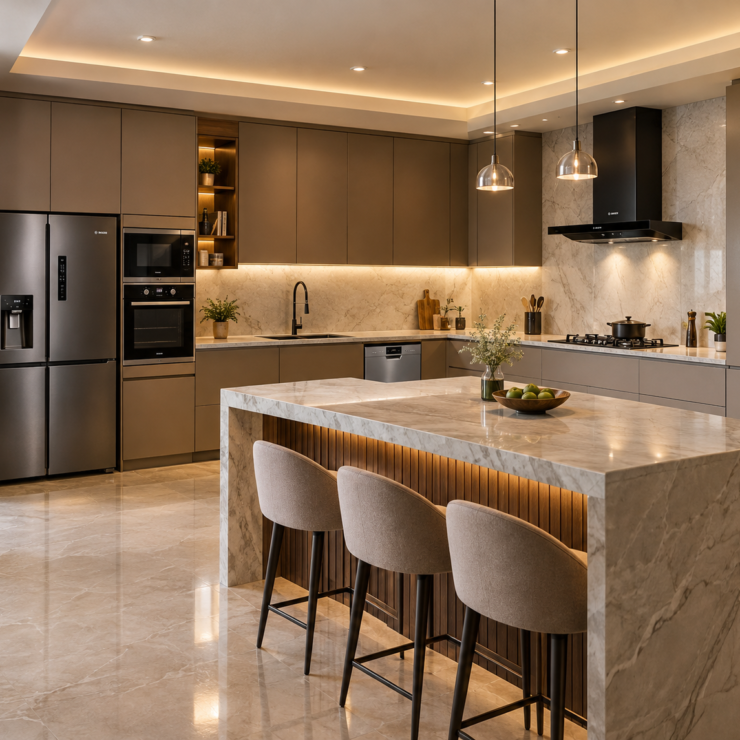
The shift from traditional standalone counters to seamless integrated modular kitchens has fundamentally altered space dynamics. One of the biggest logistical blunders homeowners make is buying standard freestanding appliances and attempting to push them into dedicated modular cabinetry pockets.
Built-in appliances (such as integrated ovens, microwaves, and dishwashers) require precise internal ventilation space behind the carcass unit to dissipate high operational heat. If your carpenter builds a completely sealed cabinet box without the manufacturer’s specified air ventilation gap, the appliance will repeatedly overheat, causing its internal circuit boards to fry while slowly scorching your high-grade marine plywood panels over time. Never finalize your wood cabinetry dimensions before obtaining the precise structural technical specification sheets of the exact appliance models you intend to purchase.
Mistake 3: Not Considering Indian Cooking Needs
A stunning, minimalist kitchen layout featured on a global interior design website looks breathtaking because it is built for continental cooking habits think light baking, boiling pastas, or quick salad prep. That exact same configuration will quickly fail when subjected to the intense demands of traditional Rajasthani cooking.
If you purchase an imported or unbranded European chimney designed around light mesh filters, it will clog completely during your first round of deep-frying pyaaz kachoris or preparing a heavy tadka. Similarly, an oven lacking robust triple-glazed insulated glass doors will emit excessive ambient heat into your small kitchen workspace, making the room incredibly uncomfortable during the intense Jaipur summer months. Your appliance selections must be engineered specifically for the dense grease, heavy steam, and volatile spice oils characteristic of daily Indian meal preparation.
Mistake 4: Ignoring After-Sales Support & Service Availability
An appliance is only as good as the service ecosystem supporting it in your specific city. Many homeowners source niche, ultra-luxury imported brands through unauthorized grey-market channels or out-of-station distributors.
When a critical error code flashes on your dishwasher screen on a busy weekday, you do not want to hear that the nearest trained engineer is based in Delhi or that a simple replacement rubber gasket will take three weeks to clear customs. Jaipur’s high mineral water content and dust macro-climates put significant mechanical stress on electronic machinery. Ensuring your brand has a direct, corporate-backed local service network with genuine parts readily available within the city limits is non-negotiable for long-term peace of mind.
Mistake 5: Buying Without Seeing a Live Demo
Reading a list of impressive technical specifications on a smartphone screen cannot substitute for a physical, tactile evaluation. An online spec sheet might state that a chimney operates at a specific suction power or noise level, but it cannot convey the real-world acoustic experience of that motor running at maximum speed inside a closed space.
Without a physical interactive demonstration, you cannot judge the tactile response of a gas hob’s flame control knobs, evaluate how smoothly an oven door hinges open under load, or inspect the interior basket flexibility of a modern dishwasher. Visiting a dedicated showroom allows you to interact with fully operational units, helping you understand exactly how the product functions before making a major financial commitment.
Mistake 6: Choosing the Wrong Size or Capacity
Sizing errors cause permanent operational headaches. Installing a narrow 60 cm chimney hood over a wide, high-output 4-burner or 5-burner gas hob ensures that rising smoke from the outer perimeter burners will bypass the suction zone entirely, gradually yellowing your overhead cabinetry.
Similarly, choosing a compact, low-capacity built-in microwave oven to save a few inches of counter space can become a daily annoyance if you have a large joint family living in residential zones like Mansarovar or C Scheme. The size and volumetric capacity of your appliances must scale dynamically with your family size, entertainment habits, and physical countertop boundaries.
Mistake 7: Ignoring Energy Efficiency & Daily Usage Cost
The upfront retail price of an appliance represents only a fraction of its total lifetime cost. Large-scale kitchen equipment like refrigerators, built-in multi-functional ovens, and high-temperature dishwashers run frequently throughout the day.
Selecting unrated or inefficient models because they save you a small amount during the initial purchase will systematically lock you into inflated monthly electricity bills for the next decade. Look for advanced engineering features such as intelligent brushless motors, EcoMode configurations, and optimized energy ratings that intelligently regulate resource consumption based on internal load metrics.
Bonus Mistake: Mixing Built-in & Freestanding Without Planning
Attempting to haphazardly combine built-in cabinetry elements with random freestanding appliances often results in visual and functional chaos. A standard freestanding refrigerator, for example, features a deeper body profile than a standard 600 mm deep modular kitchen counter. If you drop it into a recess without accounting for this depth differential, the heavy doors will protrude awkwardly past your cabinet lines, disrupting the clean, flush alignment of your kitchen profile.
Real-Life Jaipur Scenario – What a Smart Appliance Setup Looks Like
Consider a modern family setting up a home in a premium apartment complex within Malviya Nagar or Shyam Nagar. Instead of buying individual components from isolated online flash sales, they coordinate their appliance selection directly with their modular kitchen layout plan.
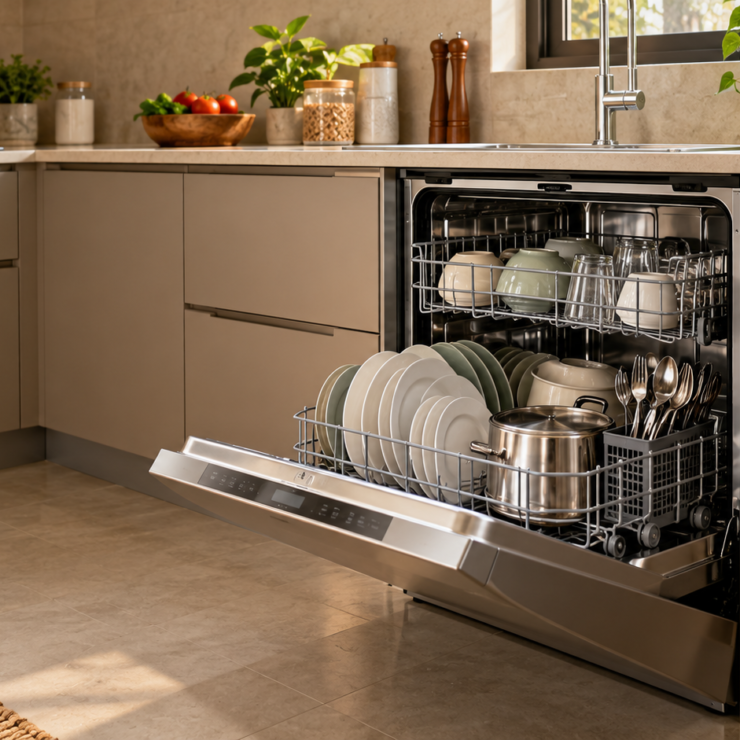
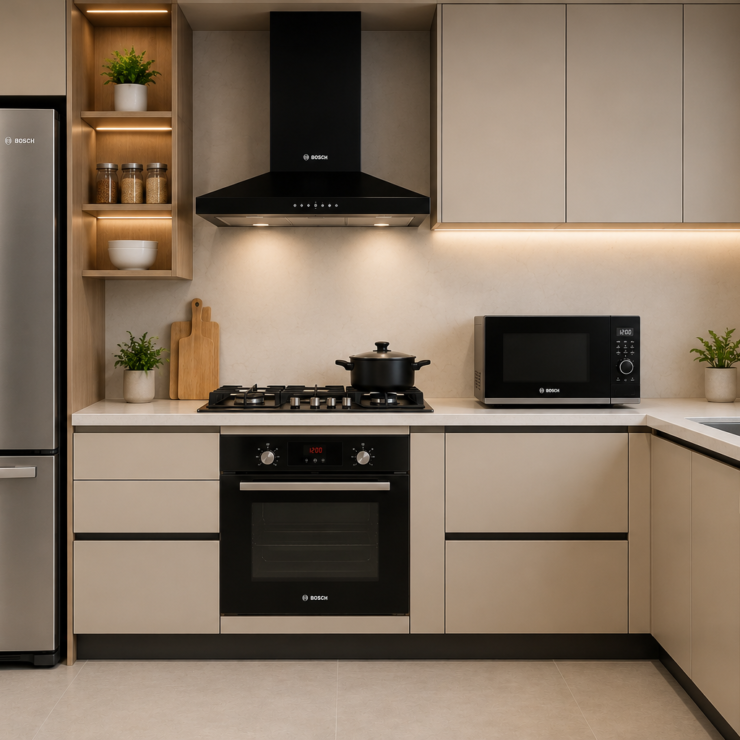
They select a high-performance 90 cm Bosch filterless chimney to anchor over a matching 4-burner gas hob equipped with precise FlameSelect technology, ensuring total smoke capture during heavy tadka frying. To handle the dense mineral hard water common across Jaipur borewells, they integrate a premium Bosch dishwasher featuring a built-in water softening unit right next to the main sink piping loop. Every appliance sits flush within the woodwork, drawing power from correctly positioned concealed electrical points, creating an efficient, high-utility culinary workflow that functions as beautifully as it looks.
Where to Experience Appliances Before Buying in Jaipur
To protect your kitchen investment from costly design mistakes, you need to transition from digital research to a real-world experience. If you want to skip the guesswork and discover the Aspire home studio, visiting a specialized studio is your most critical step.
| ASPIRE HOME STUDIO |
| Shop No 171, Gopalpura Bypass Road, New Aatish Market, Jaipur |
* Fully live and operational Bosch Series 6 & 8 collections
* Experience real motor acoustics, touchless controls, and hobs
* Complimentary technical blueprint and layout consultation
For families hunting for a reliable Bosch experience center in New Aatish Market or Sodala, our experience space is easily accessible along the main Gopalpura Bypass road corridor. Rather than looking at boxed inventory under harsh warehouse lighting, experiencing live.aspire home can save you lakhs in future carpentry adjustments. Our team doesn’t focus on high-pressure sales tactics; we provide comprehensive technical specifications, explain proper cabinet ventilation layouts, and match products directly to your daily cooking styles.
Final Takeaway – How to Make the Right Decision for Your Home
- Confirm Carcass Blueprints: Never permit your carpenter to start cutting wood panels until your specific appliance models are finalized and their technical spec sheets are in hand.
- Prioritize Local Utility Over Aesthetics: Ensure your choice of filtration technology, hob burner materials, and dishwasher water management systems are built to withstand Jaipur’s unique hard water and culinary environments.
- Verify Direct Brand Support: Always buy through verified authorized hubs to secure genuine company warranties, transparent delivery logistics, and official service registration.
If you are currently in the middle of a home renovation or planning your new kitchen layout, drop by Aspire Home Studio at New Aatish Market today. Bring your kitchen floor plans along, enjoy a relaxed cup of tea with our appliance experts, and explore our fully operational live kitchen setups to make an informed, stress-free choice for your home.
Related Posts